Service
Texts and content at scale.
A marketing team writes good copy. It does not write 4,000 product texts in four languages by Friday, and it does not check ten domains against a new EU directive. That is work for the second shift: we generate product texts and other content with artificial intelligence (AI) at scale, from your sources and with a check on every text.
Build
What we build
Three kinds of text work that pay off at scale.
Product texts from data
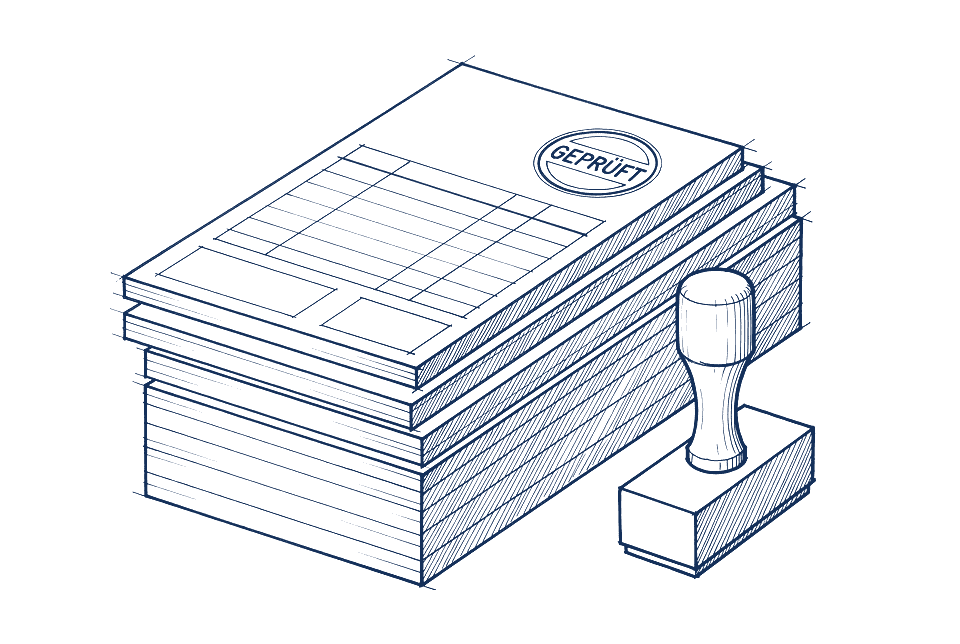
Manufacturer documents, data sheets, fields in your product information management system (PIM) and your product range become descriptions, benefit texts, metadata and category texts. Not out of thin air, but from your sources, with a fact anchor for every product. What the source does not provide is not invented but reported as a gap.
Regulated texts and rewording entire inventories
A new directive, a new brand voice, a new legal framework: we check the entire text inventory against the rules and flag the passages affected. Then we propose rewordings and implement them once you approve. Take EmpCo as an example: EU Directive 2024/825 only allows claims such as "zero emissions" or "climate neutral" with evidence. For a manufacturer with ten domains and four languages, that is no longer an editorial task, it is a workflow.
Multiple languages with a technical glossary
Translation into eleven languages or more with your glossary, so product terms are the same in every language. Only empty fields are filled; texts your editors have already checked stay untouched. For service content, error codes, app texts and help articles that would otherwise never be translated because it would not pay off.
If your editorial team needs its own interface for this, for example to see what needs doing on each page and approve it, we build that too. More under Tools that fit you.
Evidence
How it runs at a fuel cell manufacturer
Listed, ten domains, up to four languages per website.
To check the environmental claims under the EmpCo Directive, we searched every domain and built a tool in which the client can see what needs doing on each page. On top of that came an editorial guide and AI rewording, with human review of every passage. Service content, error codes and app texts are maintained centrally and translated by AI into eleven languages, using the client's technical glossary.
How it works
How a run works
- Rules
Setting the rules with you
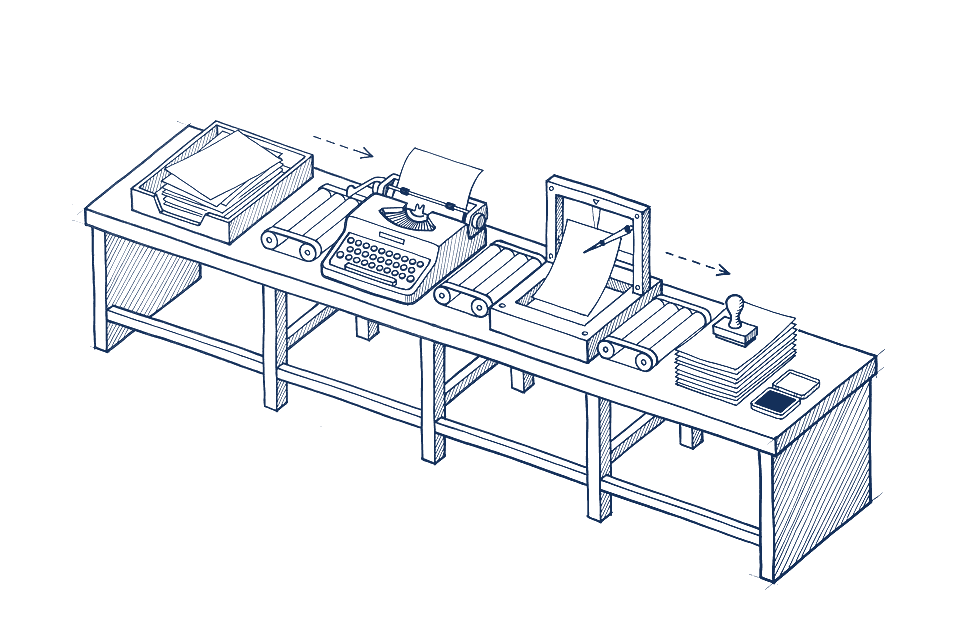
What may be changed and what may not. Which terms are fixed. What a person has to approve. The rulebook is a document you can read and change.
- Trial run
100 passages, checked together
The workflow processes a sample. You check every passage. Whatever does not fit becomes a rule. Only once the sample passes does the full inventory run.
- Run
The full inventory, with checks
Every output goes through automated checks: length, terminology, facts against the source, language, format. Whatever fails is not published but reported.
- Log
Traceable for every passage
Each text records what was changed, under which rule and who approved it. That is your answer when someone asks why a sentence reads the way it does.
- Operation
New content follows automatically
New products, new languages, changed rules: the workflow runs on schedule, monitored and adjusted as part of ongoing operation.
Price
Price and scope
From €12,000 net, plus VAT, as a fixed price per workflow, binding after the analysis. What determines the price:
- the number of sources
- how strict the rules are
- the number of languages
- whether the result is written back into a system (PIM, shop, CMS) or delivered as a file
Data flow: texts and product data go to the language model of your choice. For inventories without personal data, cloud models under a data processing agreement are usually enough. If the texts contain customer data, they run via EU data centres or open models on your own servers. Data flow per service.
Industries
Relevant industries
- Energy technology and cleantech: check environmental claims under EmpCo across the entire inventory and maintain service content in many languages.
- Electronics and technical distribution: bring data sheets into the PIM and generate product texts from them for thousands of items.
- Mechanical and plant engineering: translate technical documentation with your company glossary and keep it up to date.
Questions
Questions about texts at scale
What marketing and product management ask before the first run starts. More answers under Questions and answers.
Will the AI invent features that are not in our data?
No, the fact anchor prevents that. Every text is built from your sources, meaning the data sheet, PIM fields or manufacturer document. The check compares every feature mentioned against that source. If the source does not provide a value, the workflow reports a gap instead of filling it in. The article Thousands of product texts with AI describes the checks in detail.
Will the workflow overwrite texts our editors have already checked?
Only if you set it up that way in the rulebook. Usually the workflow fills empty fields and leaves texts your editors have checked untouched. When rewording entire inventories, for example under the EmpCo Directive, it proposes changes and a person approves each passage. Every change is in the log and can be reversed.
How much work is left for our marketing team?
More at the start than later. Your team sets the rulebook with us and checks around 100 passages in the trial run. In operation, what remains are the approvals you specify in the rulebook and a look at any gaps reported. The writing itself and the checking against the rules are done by the workflow.
Do product texts generated with AI have to be labelled?
In our assessment, usually not. Article 50(4) of the EU AI Act requires disclosure only for texts that inform the public on matters of public interest. Even there, it does not apply if a person has reviewed the text and holds editorial responsibility for it. Product descriptions in a shop usually do not fall under this. Clarify your case with your legal adviser; this answer does not replace legal advice. The article The EU AI Act for mid-sized companies sets out the obligations per workflow.
Which languages does this work in?
In all major European languages and many others that the large language models handle well. At a fuel cell manufacturer, service content runs in eleven languages. What matters is your technical glossary: it sets what product terms are called in each language, and the check makes sure they are used. You decide per language which texts stay with your editors.
Handover
The first step is a 30-minute call.
You tell us about the workflow that costs you the most time. We tell you honestly whether AI pays off there and what the next step would be. Whether a workflow analysis follows is up to you.